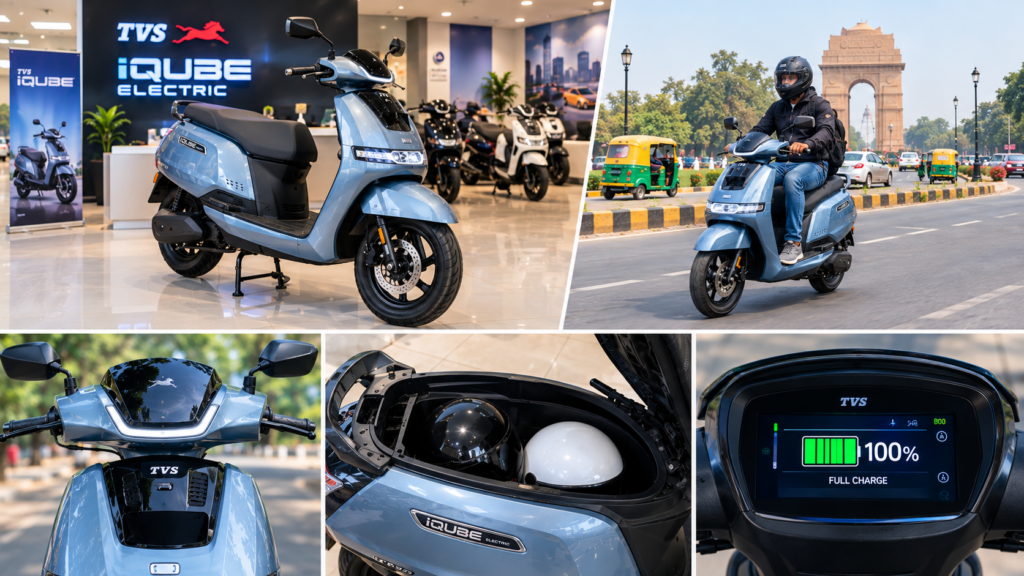
The demand for electric two-wheelers is growing rapidly in India as more people look for affordable and convenient ways to travel. The TVS iQube electric bike and scooty is a popular option for riders who want a modern scooty for daily commuting. It combines practical styling, comfortable seating, smart technology, and quiet electric performance.
This electric bike is designed mainly for people who travel to work, college, markets, and other nearby places. Its electric powertrain offers a different riding experience from traditional petrol scooters. Buyers can also choose between different battery options according to their daily travel needs and budget.
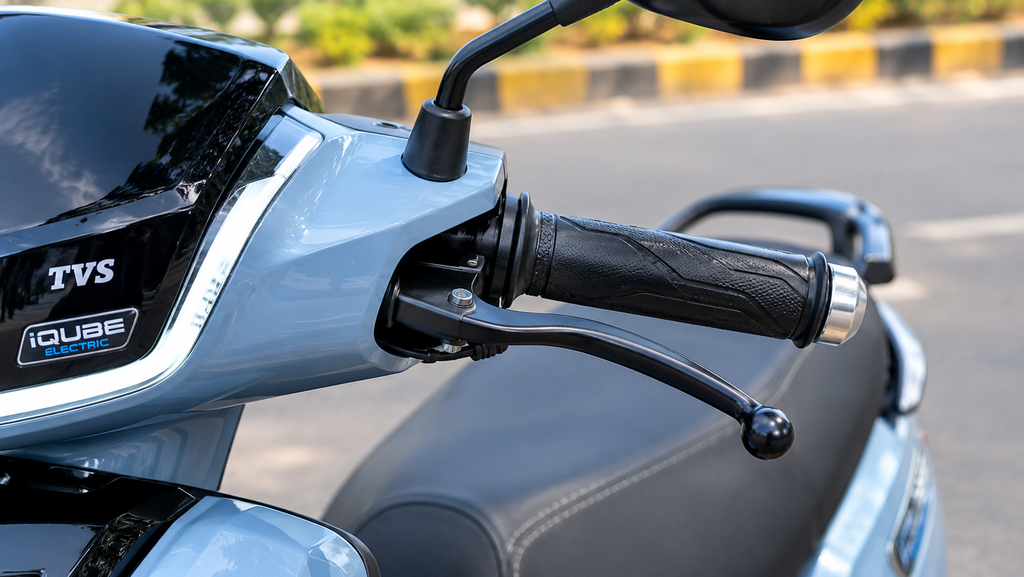
The TVS iQube is available in multiple variants, with differences in battery capacity, claimed riding range, and price. Before purchasing this electric scooty, it is important to understand its specifications, charging requirements, features, and overall value.
1. TVS iQube Electric Scooty Overview
The TVS iQube is an electric scooter developed for everyday urban travel. Its design focuses on comfort, practicality, and ease of use. Unlike sporty electric two-wheelers, it follows a familiar scooter design that can appeal to riders of different age groups.
This electric bike is suitable for people who want to reduce their dependence on petrol for regular journeys. Its electric motor provides smooth acceleration, while its automatic riding experience makes it convenient in busy city traffic.
The scooter also offers modern features on selected variants, including a digital display and smartphone connectivity. These features help riders access useful information while riding.
2. TVS iQube Price in India
The price of the TVS iQube depends on the selected variant and battery configuration. According to the supplied price information, the listed ex-showroom prices range from approximately ₹1.20 lakh to ₹1.51 lakh.
Here is a comparison of the four variants.
| TVS iQube Variant | Listed Ex-Showroom Price | Claimed Range | Top Speed |
|---|---|---|---|
| iQube 2.3 kWh | ₹1,20,374 | 94 km | 68 km/h |
| iQube 3.1 kWh | ₹1,36,965 | 123 km | 82 km/h |
| iQube 3.5 kWh | ₹1,47,200 | 145 km | 82 km/h |
| iQube MillionR Special Edition | ₹1,50,751 | 145 km | 82 km/h |
Note: These figures are based on the supplied information. Prices and specifications may change depending on the city, variant, applicable offers, and latest manufacturer updates.
The entry-level model may suit riders with shorter daily commutes. The higher-battery variants offer a longer claimed range, making them worth considering for people who travel more frequently.
Buyers should also check the on-road price before making a decision. Registration, insurance, local charges, and available offers may affect the final amount.
3. Battery Capacity and Riding Range
Battery capacity is one of the most important factors when selecting an electric two-wheeler. It affects how much energy the scooter can store and helps determine its potential riding range.
The TVS iQube is listed with battery options of 2.3 kWh, 3.1 kWh, and 3.5 kWh. The claimed range varies across these configurations.
The 2.3 kWh variant offers a claimed range of 94 km per charge. The 3.1 kWh version is listed with a range of 123 km, while the 3.5 kWh model offers a claimed range of 145 km.
A higher claimed range can be useful for riders who cover longer distances every day. However, actual performance depends on several factors, including traffic, rider weight, road conditions, riding style, and weather.
Before buying an electric bike, consider your regular travel distance instead of choosing a variant based only on its maximum claimed range.
4. Motor Performance and Top Speed
The TVS iQube uses an electric motor that delivers power without the conventional gear changes found in many petrol motorcycles. This arrangement makes the scooter convenient for everyday city riding.
According to the supplied specifications, the listed motor power is 3.68 kW. The claimed top speed depends on the selected variant.
The 2.3 kWh model has a listed top speed of 68 km/h, while the 3.1 kWh and 3.5 kWh variants are listed at 82 km/h.
These speeds make the scooter worth considering for routine urban journeys. Its smooth acceleration can also help riders move through stop-and-go traffic.
However, buyers who regularly travel on high-speed roads should carefully consider their route requirements and the scooter’s performance limitations.
5. Charging Time and Convenience
Charging is an essential part of owning an electric scooter. Unlike a petrol vehicle, an electric two-wheeler needs access to a suitable charging point to replenish its battery.
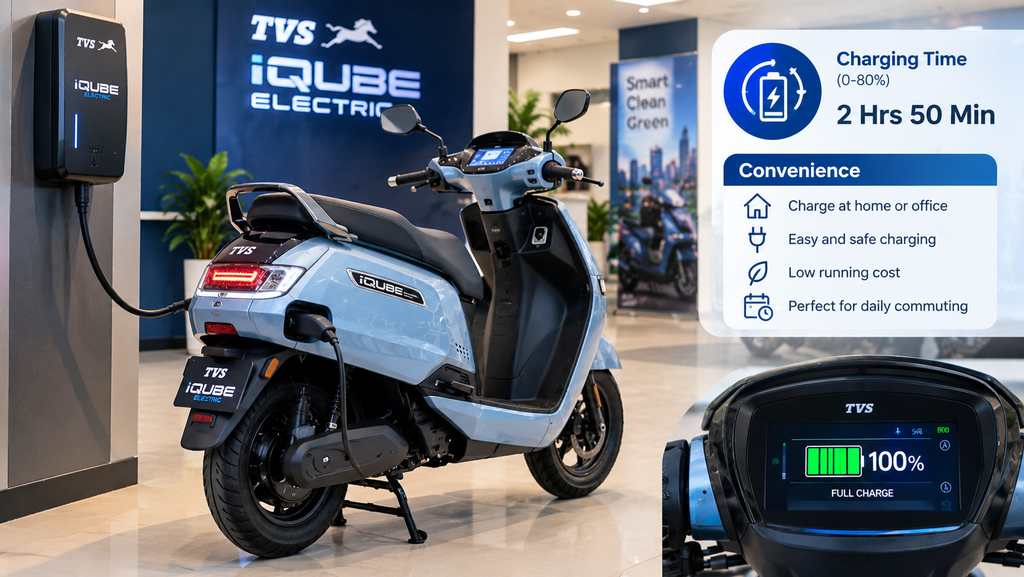
The supplied specifications list a charging time of approximately 2 hours and 50 minutes for charging from 0% to 80%. This figure should be verified for the exact variant and charging equipment before purchase.
Charging duration can vary depending on the battery configuration, charger specifications, temperature, and charging conditions.
For people who travel short distances every day, charging the scooter at home may be a practical option. Riders can plan their charging routine around their regular schedule.
Before purchasing an electric bike, check the charging requirements and make sure you have a convenient place to charge it safely.
6. Design and Styling
The TVS iQube features a practical scooter design rather than the aggressive appearance of a sports motorcycle. Its familiar shape makes it suitable for daily use and may appeal to families looking for an electric alternative to a conventional petrol scooty.
The overall styling focuses on comfort and convenience. Its scooter layout is designed to make everyday journeys manageable, whether riders are travelling to work, visiting shops, or running household errands.
The digital instrument display on equipped variants adds a modern touch. Depending on the model, riders may also get connected features that provide additional information and convenience.
The design is particularly suitable for people who prefer a straightforward electric scooter without an overly complicated riding experience.
7. Smart Features and Technology
Modern electric scooters offer more than just battery-powered transportation. Digital displays and connected technology can make daily riding more convenient.
The TVS iQube is associated with smart features such as a digital instrument display and smartphone connectivity on equipped variants. Certain versions may also provide additional information through the vehicle’s connected functions.
These features can help riders monitor important riding information and understand their scooter’s status.
Some versions may include useful assistance features, such as reverse assist. Availability can differ by variant, so buyers should check the exact equipment included with their chosen model.
When comparing an electric bike, it is important to distinguish between features available across the entire range and those restricted to particular variants.
8. Comfort and Everyday Riding Experience
electric bike Comfort is important when choosing a scooter for regular commuting. A vehicle used every day should provide a convenient riding position and feel manageable in ordinary traffic conditions.
The TVS iQube has received positive feedback from riders for its comfortable seating, solid construction, and smooth operation. Its electric powertrain also offers quiet performance compared with a conventional petrol scooter.
The scooter’s familiar controls can make it approachable for people moving from petrol scooters to electric mobility.
However, comfort is subjective. Rider height, body proportions, passenger requirements, and road conditions can influence the overall experience.
A test ride is a useful way to check the seat, riding position, handling, and braking performance before making a purchase.
9. Braking, Handling and Safety
Braking performance and handling should be important considerations when buying an electric scooter. Riders need predictable control while travelling through busy streets, making turns, or stopping at traffic signals.
The TVS iQube has received favourable user feedback for its braking performance and everyday ride quality. Nevertheless, buyers should confirm the braking equipment and safety features available on their selected variant.
Tyre condition, road surface, riding speed, and regular maintenance also affect safety.
Always wear a properly fitted helmet and follow traffic regulations. Avoid carrying more passengers or luggage than the scooter permits.
A careful test ride can help you evaluate how the scooter responds during acceleration, turning, and braking.
10. Maintenance and Running Costs
An electric scooter does not require petrol, engine oil, or the same routine engine servicing associated with a conventional petrol vehicle. This can make ownership more convenient for some riders.
However, an electric scooter still requires regular care. Tyres, brakes, suspension, electrical components, and other parts should be inspected according to the manufacturer’s recommendations.
Battery condition and charging habits also matter. Following the recommended charging instructions and avoiding improper charging equipment can help support safe operation.
The total running cost depends on electricity prices, distance travelled, charging efficiency, maintenance needs, and battery-related expenses over time.
People considering an electric bike should compare the expected cost of ownership with that of a petrol scooter. A lower energy cost may be beneficial, but the final savings depend on individual usage and purchase price.
11. Which TVS iQube electric bike and scooty Variant Should You Choose?
The best variant depends on your daily travel distance, budget, and preferred features.
TVS iQube 2.3 kWh: This version may suit people who mainly travel short distances around their neighbourhood. Its lower listed price makes it a starting point for buyers exploring electric scooters.
TVS iQube 3.1 kWh: This variant offers a higher claimed range than the entry-level model. It may be worth considering for commuters who want additional range for their daily journeys.
TVS iQube 3.5 kWh: Riders who regularly travel longer distances may prefer this battery option because of its higher claimed range.
TVS iQube MillionR Special Edition: Buyers interested in the special edition can compare its price, styling, and included equipment with the standard variants before deciding.
Regardless of the model, consider your normal daily distance, charging access, and total budget. The longest-range version is not necessarily the best choice for every rider.
12. Things to Check Before Buying the TVS iQube
Before purchasing the TVS iQube, take time to compare the available models and check their latest specifications.
Consider these important points:
- Battery capacity: Choose a battery option that suits your daily travel requirements.
- Real-world range: Remember that actual range may be lower than the advertised figure.
- Charging time: Confirm how long your chosen variant takes to charge using the recommended equipment.
- Top speed: Make sure the scooter’s performance matches your regular routes.
- Comfort: Take a test ride to evaluate the seat, riding position, and handling.
- On-road price: Check the final cost, including insurance and other applicable charges.
- Warranty: Review the battery and vehicle warranty terms before buying.
- Service support: Check the availability of authorised service facilities in your area.
Comparing these factors can help you make a more informed decision and choose a scooter that fits your everyday needs.
Conclusion
The TVS iQube is an electric scooty designed for convenient everyday travel. Its familiar styling, comfortable seating, quiet motor, digital features, and multiple battery options make it an option worth considering for urban commuters.